Care Tips for Longer-Lasting Cut Roses: Key Points
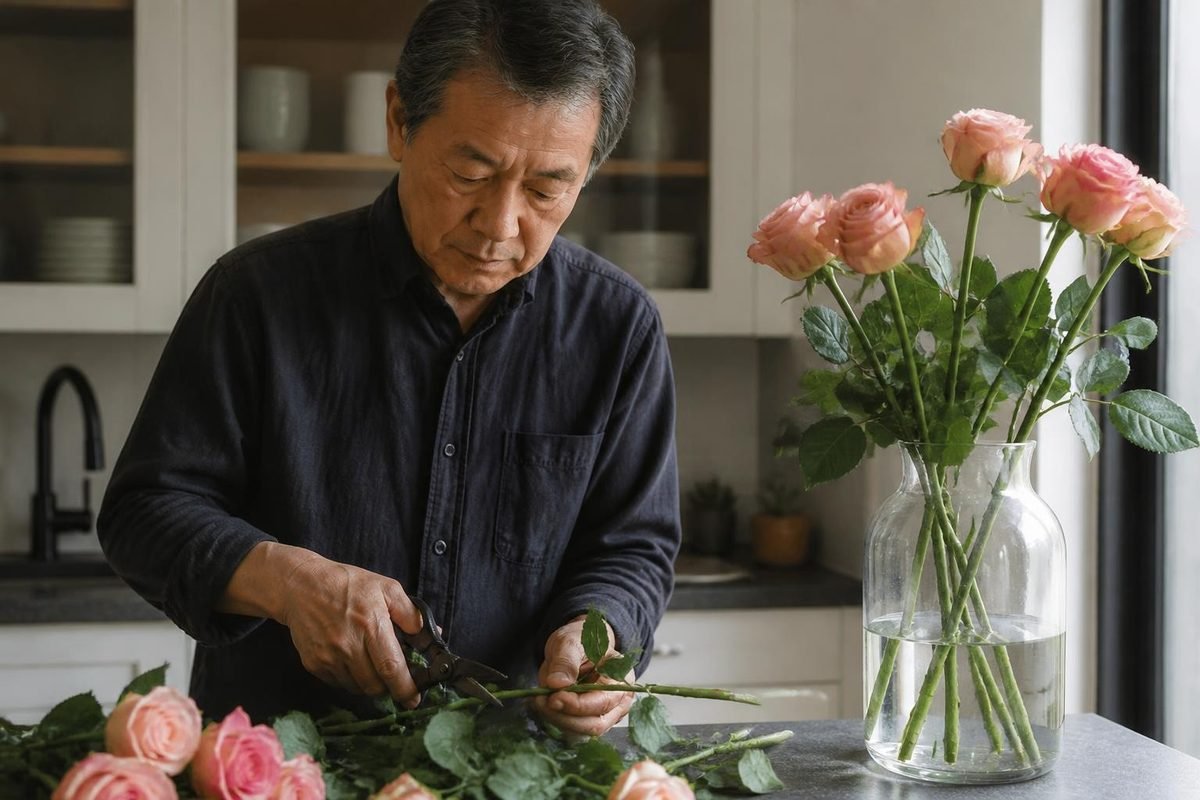
Roses stay fresh longer in a clean vase with fresh water, freshly trimmed stems, and a cool spot away from heat. Check the water each day, replace it regularly, and remove leaves or petals as they start to decay.
Give the roses a clean home
Before arranging the flowers, wash the vase with dish soap and water, then rinse it thoroughly. Even a vase that looks spotless may hold residue from an earlier bouquet, so clean it before use rather than trusting appearances.
Pick a vase tall enough to hold the stems upright without squeezing the rose heads together. Add fresh water, leaving room for the stems and enough space to lift or move the vase without splashing. The blooms need support, but they also need a little breathing room.
If the roses came with flower food, add it to the water by following the directions on the packet. Measure the amount of water the instructions call for instead of estimating. Flower food is made to help cut flowers absorb water and remain fresh.
Prepare the stems and arrange the blooms
Get the vase ready before you work on the roses. Prepare the flowers just before arranging them, so their freshly cut stems spend as little time out of water as possible.
- Take off the wrapping and gently separate the stems.
- Remove leaves that would end up below the water. You can keep the leaves higher on the stems if you like how they look.
- With clean, sharp scissors or pruning shears, snip a small amount from the base of every stem. Cut at an angle.
- Put each rose into the prepared water soon after cutting it. Space the stems so the flowers sit loosely rather than being crowded together.
Leaves under the waterline can break down and leave the water dirty. Once the roses are in place, look at the waterline again. A stem can shift as you add flowers, and a leaf that was safely above water may end up submerged.
Keep the water clean and topped up
Take a look at the vase every day. If the water has dropped, add more so the cut ends remain covered. Roses draw water up through their stems, and they may wilt if those ends are left dry.
Replace the water every couple of days, or earlier if it turns cloudy. Before refilling, wash and rinse the vase. Cut a little more off the base of each stem, then return the roses to fresh water.
As you check the arrangement, remove leaves and petals that are fading or decaying. If one rose is breaking down while the others still look good, take that stem out. That keeps the fading bloom from sitting among the flowers that remain fresh.
Find a cool place for the vase
Put the roses somewhere cool, away from direct sunlight, heating vents, and other sources of warmth. A cool room is a better choice than a sunny windowsill. Avoid drafts too, since moving air can dry the flowers out.
Do not place the vase beside a bowl of ripening fruit. Some fruit gives off ethylene gas, which can shorten the life of cut flowers.
A brief daily check is enough to keep up with the basics. Look at the water level and its clarity, remove any decaying material, and trim the stems again when you clean the vase. Roses do not ask for much, though they are quite particular about their drinking water.
On the same subject: corporate flower etiquette